
We Sponsor Time & Hardware for Selected Hackathons
Organizing a neurotech hackathon, biomedical engineering competition, or university build weekend? PiEEG partners with selected events worldwide—providing open-source EEG/BCI hardware, live engineering onboarding, and community project spotlights.
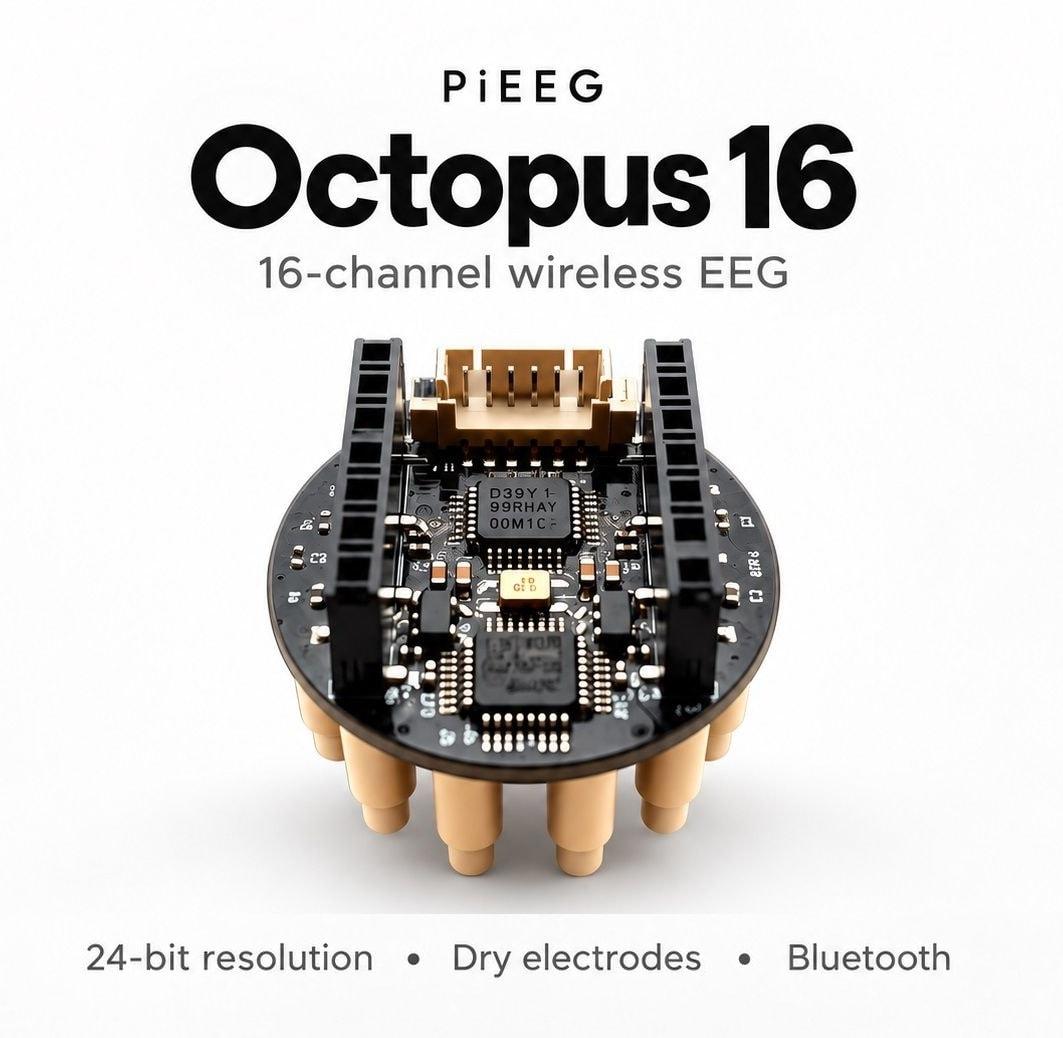
Built for 36-Hour Builds: Octopus 16
Coin-sized, wireless, 16 spring-loaded dry electrodes—no conductive gel, no tangled wires. Put it on a headband and stream 24-bit EEG straight into the browser or Python in minutes.
How We Support Selected Hackathons
Hardware alone isn't enough for a 36-hour hackathon. We pair open-source biosignal kits with direct engineering time so teams ship working demos by Sunday afternoon.
Open-Source BCI Hardware
We sponsor selected hackathons with PiEEG boards, wireless 16-channel Octopus-16 sensors, OctoBio starter kits, EEG caps, and EMG/ECG electrode packs—plus tailored fleet packs for larger events.
Dedicated Engineering Time
Our team sponsors hands-on time for selected events: pre-event organizer calls, a live kick-off workshop on EEG signal acquisition, real-time Discord debugging during hacking hours, and judging.
Zero-Install Weekend Stack
Hackers don't lose Saturday fighting drivers. With PiEEG Cloud, WebBLE streaming, Python/JS SDKs, and PiEEG-server, teams go from unboxing to live 16-channel brain data in under 10 minutes.
Prizes & Community Spotlight
Standout hackathon builds get featured across the PiEEG ecosystem, giving student and developer teams permanent visibility for their open-source repositories and demos.
Weekend Hackathon Tracks
Need challenge prompts for your participants? Feel free to use these proven weekend tracks—or let hackers pick from our 16 open project ideas.
Real-Time Neural Control & Robotics
Stream multi-channel EEG, EMG, or EOG into Python, ROS, or WebSockets to steer rovers, robotic arms, wheelchairs, or smart-home devices hands-free.
Zero-Install Web, Gaming & VR Experiences
Build SSVEP/c-VEP spellers, brain-reactive VRChat avatars, Meta Quest neural overlays, or multiplayer neurofeedback games in TypeScript and Unity.
Low-Channel Decoding & Artifact Removal
Train compact motor-imagery classifiers, sleep/focus state trackers, or real-time blink/jaw-clench artifact filters that run on edge devices.
Brain + Heart + Muscle Fusion
Combine EEG with ECG heart-rate variability, EMG gestures, or webcam pupillometry to create adaptive biofeedback, music generation, or accessibility tools.
How to Apply for Sponsorship
We review hackathon sponsorship requests on a rolling basis. To help us evaluate your event quickly, include the following details when you reach out:
- Event name, dates, location (in-person or hybrid), and website or organizer deck
- Host university, student society, research lab, or community organization
- Expected total attendance and number of teams competing in the neurotech / BCI track
- What support you are looking for (sponsored hardware units, fleet discount, live workshop, mentorship, or prize categories)
- How participants will publish their weekend builds (e.g. Devpost + public GitHub repositories)
Need 10–25+ Boards for Your Lab or Event?
Alongside sponsored kits for selected events, organizers can configure custom Hackathon Packs (e.g. 15× Octopus-16 + 10× EMG Kits) with automatic 10%–20% institutional discounts.
Open Fleet ConfiguratorAll hackathon participants must operate PiEEG devices on battery power only when electrodes are worn by a person, never mains power. PiEEG hardware is for research and education only, not medical use.
Hackathon Sponsorship FAQ
What kinds of hackathons does PiEEG sponsor?
We prioritize university neurotech clubs, biomedical engineering societies, IEEE EMBS student branches, neuroscience department hackathons, and major student/developer AI or hardware hackathons that include a dedicated neurotech or biosignals track.
How far in advance should organizers apply?
Please reach out at least 4 to 8 weeks before your event date. International hardware shipping and customs clearance take time, and early coordination lets us schedule live onboarding sessions for your participants.
What do you look for when selecting hackathons to sponsor?
We look at expected participant count, how many teams will actively build with biosignal hardware, whether projects will be shared as public open-source repositories, and whether your organizing team has a clear plan for hardware distribution and battery-only safety.
Can we also order extra boards at an institutional hackathon discount?
Yes. Alongside sponsored hardware and time for selected events, universities and hackathon organizers can use our institutional fleet tiers (up to 20% off boards plus custom hackathon packs of Octopus-16 and OctoBio kits).
Bringing Neurotech to Your Next Hackathon?
Tell us about your event, timeline, and student community—let's empower the next wave of open-source BCI builders together.