


NeuroGEAR
Built by Dr. Jaime Andrés Rincón Arango
From neural intent to autonomous robotic action: choose an object with your brain, and an AI-driven robot arm picks it up.
Hardware shipped & building now · Month 1 demo in early December 2026.
More
About PiEEGContactCareersPartnershipPiEEG StoreOculomotor & Pupillometry BenchOptical Physiological BenchPiEEG XRAura VRoctoWatch (Garmin)BodyPress MobileBrowser Extension1020 AcademybioIDEBio-Pen (Live Lab)octoBridgeSignal LabBCI guidesTutorialsExamples & DemosSupportOpen Ideas & VolunteersOctopus-16 FirmwareExplore all pagesOut of builders around the world, these five pioneering makers won an Octopus 16 hardware grant for the audacity of their ideas—from mind-guided drones and robotic arms to zero-calibration spellers and neural jazz. Explore their builds, cheer them on with a like, and share their work—or pitch your own BCI idea to join the next spotlight cohort.
These makers earned their spot on this page. Open any project to read their full engineering plan, check out their profiles, and tap the heart to cheer on as many builds as you love.
Built by Dr. Jaime Andrés Rincón Arango
From neural intent to autonomous robotic action: choose an object with your brain, and an AI-driven robot arm picks it up.
Hardware shipped & building now · Month 1 demo in early December 2026.
Built by Jonah Golder & Dylan Deshler
Listen and respond to your body's electrical signals through music.
Hardware shipped & building now · Month 1 demo in early December 2026.

Built by Hanneke Scheppink
Spell with your brain in seconds, and challenge a friend to hands-free brain games.
Hardware shipped & building now · Month 1 demo in early December 2026.
Built by Qasim Iqbal
Steer a rover hands-free: live video in AR glasses, with EEG-based controls.
Hardware shipped & building now · Month 1 demo in early December 2026.

Built by Polina Lekhnitskaia
Walk around with a drone above you, see its live view in your glasses, and move it with EEG signals.
Hardware shipped & building now · Month 1 demo in early December 2026.
Cheer on the builders whose BCI applications inspire you most. Final community showcase will be celebrated at the end.
| Rank | Winning Builder & Project | Cheers |
|---|---|---|
| #1 | NeuroGEARNeural Robotics Pioneer by Dr. Jaime Andrés Rincón Arango | 0 |
| #2 | Do you like jazz?Neural Audio Innovators by Jonah Golder & Dylan Deshler | 0 |
| #3 | OctoSpell & OctoGameZero-Calibration BCI Builder by Hanneke Scheppink | 0 |
| #4 | Brain-Driven FPV RoverAR Teleoperation Architect by Qasim Iqbal | 0 |
| #5 | Mind-Guided Drone ViewAerial BCI Explorer by Polina Lekhnitskaia | 0 |
Celebrating bold BCI builders—and opening the door for yours.
Makers pitch their boldest brain-computer interface ideas. The most exciting applications win a free Octopus 16 board and an official spot on this showcase page.
Tap the heart on every project that excites you and share their winner cards on LinkedIn or X so the whole neurotech world sees what they're building.
In early December 2026, each winner publishes their Month 1 demo, code, photos and videos right here—followed by the final community showcase.
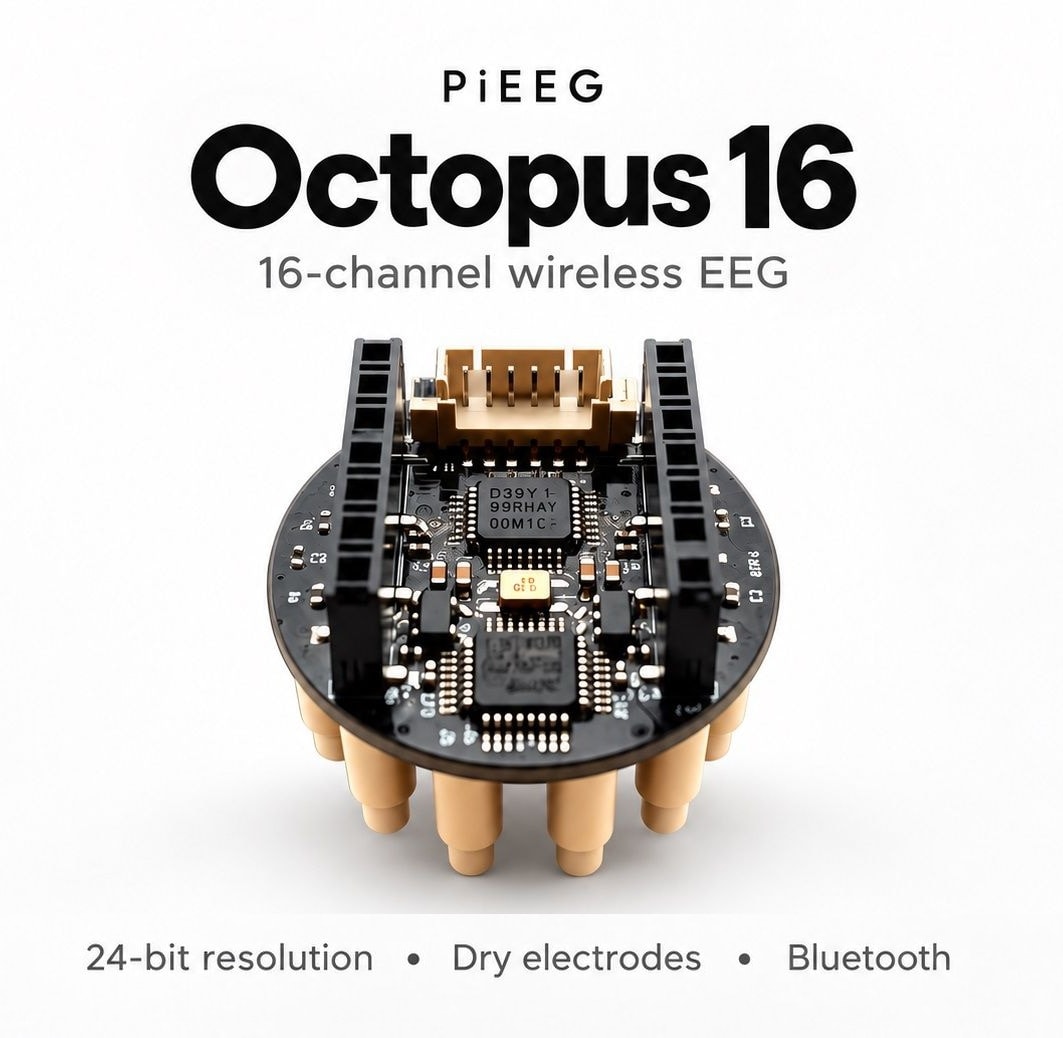
16 channels on a coin-sized board: Seeed Studio XIAO ESP32-S3, dual 24-bit ADS131M08 front-ends, dry pogo-pin electrodes, battery power and Bluetooth streaming.


We don't just ship hardware—we spotlight the builders pushing open-source neurotech forward. Whether you're pitching a bold idea for our next free Octopus 16 grant cohort or you've already built an application with PiEEG that deserves the stage, we want to highlight your work.

Want to know when applications open for the next batch of free Octopus 16 boards, or when Month 1 progress and final results go live? Subscribe below — we only send updates with your explicit consent, and you can unsubscribe at any time.
Chat with builders in real time on Discord or explore our MIT open-source software, firmware and SDKs on GitHub.
Photos, names and project ideas are shown with each maker's permission. Octopus 16 is not a medical device and isn't for diagnosis or treatment.
Likes are counted once per project per visitor. We may remove likes that look automated. Makers can ask us anytime to change or remove their project.