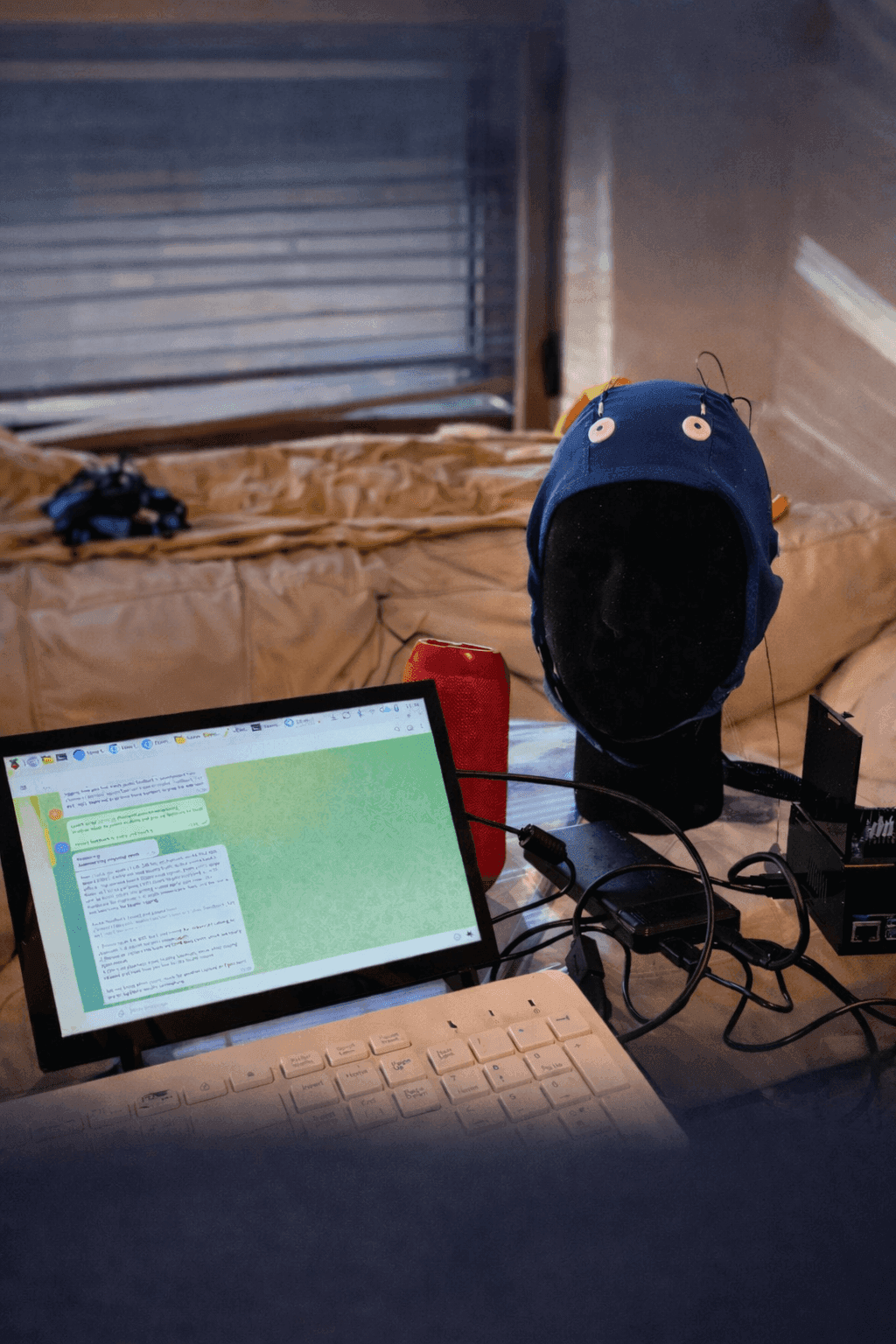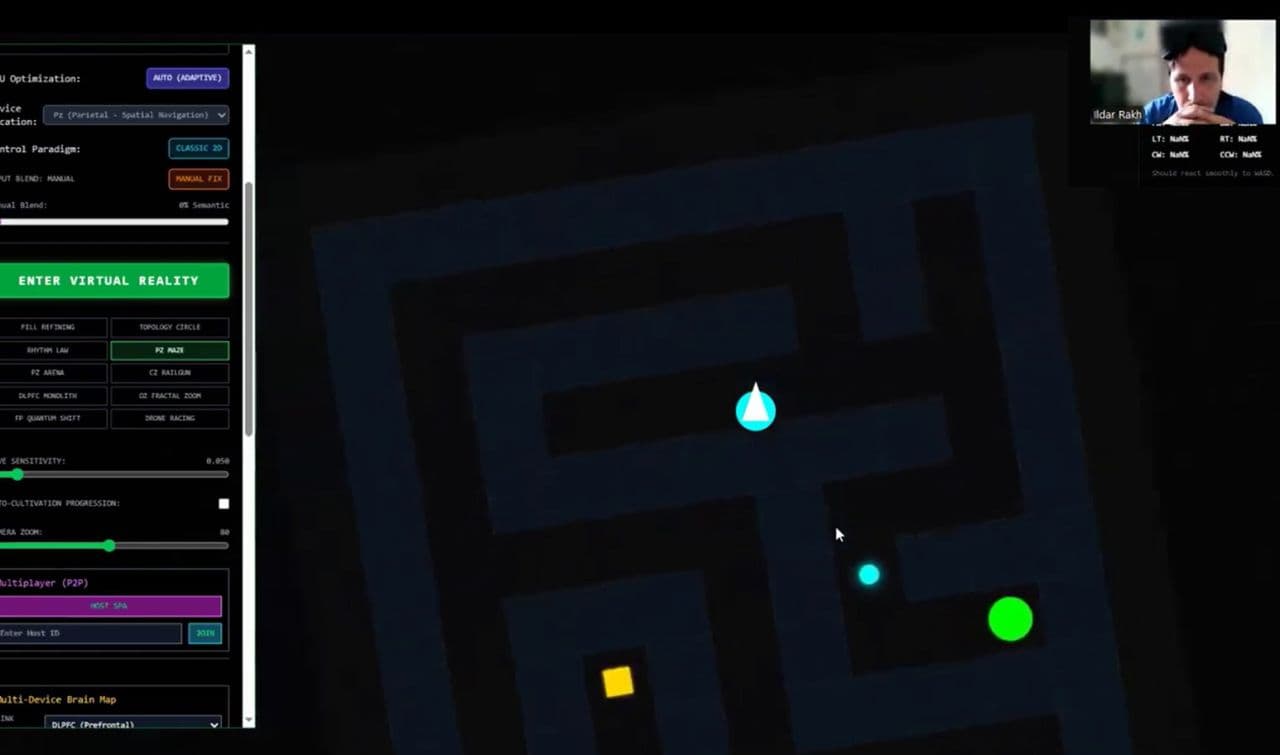
At PiEEG, we explore every direction neuroscience can take us. Our latest experiment pushed into unfamiliar territory: navigating a physical maze controlled entirely by EEG coherence.
Most people think EEG measures "brain volume"—how much activity is happening. Coherence is fundamentally different. It measures synchronization between brain regions, like detecting when two musicians lock into perfect rhythm.
The 120-Pair Orchestra
With 16 EEG channels, the system analyzes 120 unique pairs in real-time, watching for moments when distant brain regions fire in lockstep. When you focus with intent, specific networks synchronize—coherence spikes—and the maze responds.
This is the real challenge of Brain-Computer Interfaces: distinguishing purposeful thought from random mind-wandering.
The Paradox of Neural Control
In theory, it's straightforward: focus → coherence → movement. In practice, it's profoundly surreal.
You can't "try harder" in any conventional sense. Force creates noise. Overthinking scatters the signal. But with enough practice, something fundamental shifts: you stop trying to control neurons and start learning to orchestrate coherence itself.
It's not telekinesis. It's not magic. It's learning a skill your brain already possesses—one you've just never had feedback for.
Watch It In Action
See the full experiment on YouTube, where we demonstrate real-time coherence-based navigation through physical space.
Open Source Research
The entire system is available as Brain Stethoscope on GitHub. We believe the most important discoveries in neuroscience shouldn't be locked behind institutional walls—they should be tools anyone can explore, modify, and build upon.
Because the future of neural interfaces isn't about reading minds. It's about teaching brains new languages.